Digital Skills Needed For Caribbean To Stay Globally Competitive
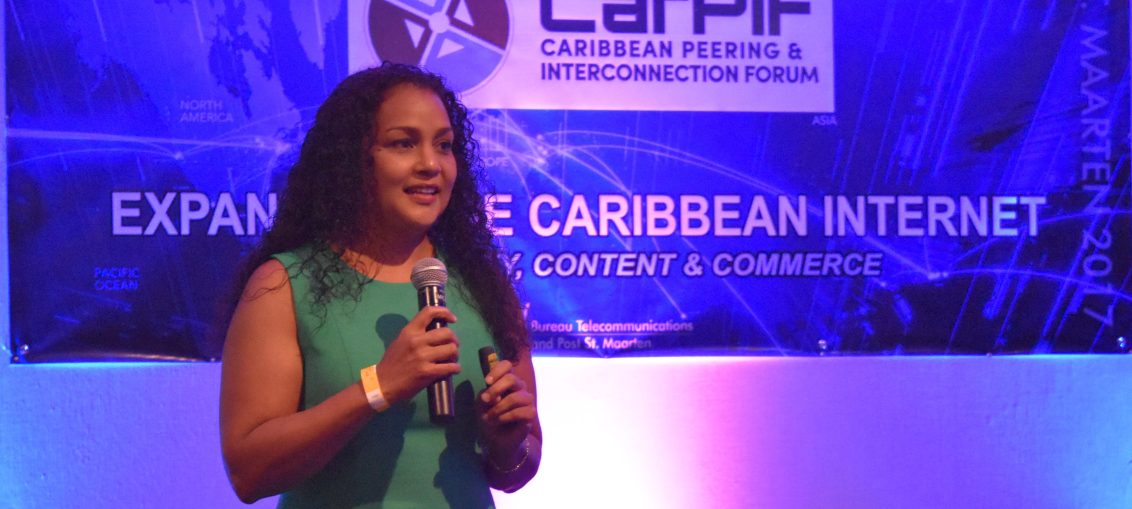
The digital era is here to stay but many still lack the skills needed to get ahead in the Internet economy.

A 2017 CIGI-Ipsos survey on Internet security and trust found that a significant percentage of Internet users do not trust the Internet enough to conduct financial transactions online. Even among those willing to embrace digital commerce, many face another barrier: digital literacy.

Rhea Yaw Ching, executive director of the US-based Covela Foundation, points out that the problem is more acute in Latin America and in particular the Caribbean, where an increasing number of citizens and businesses are now coming online.

“There is a direct correlation between digital literacy and financial inclusion,” said Yaw Ching, a former telecommunications sector executive.

“Sixty-five per cent of the Caribbean population is unbanked, meaning that they are predominantly cash-based. And a further 20 per cent are underbanked, meaning that they under-utilise the financial services that do exist,” she added.

What makes the Caribbean’s challenge worse is the persistent gap between the formal financial sector and the hundreds of thousands of small or micro-organisations operating in the informal economy with little access to services such as automated payments, credit cards, online banking, mobile apps or even ATMs.

“The informal economy is a key driver of the economics of most Caribbean nations. Unfortunately, the informal economy is still largely characterised by limited access to ICT services, limited access to formal financial services, and, critically, limited digital skills,” Yaw Ching said.

She added that the Caribbean still has a long way to go before it can realise the benefits brought about by the digital era.

“The key to unlocking true innovation lies in equipping citizens with the digital skills most relevant to the region and developing the financial systems and services to allow them to fully capitalize Caribbean ideas and innovations.”

Why the Caribbean Needs to Strengthen Its Internet Infrastructure

PHILIPSBURG, St Maarten—The Caribbean will have to strengthen its Internet infrastructure if it is to keep pace with the world’s growing digital economy.

That’s the view held by Bevil Wooding, an Internet Strategist with US-based non-profit Packet Clearing House, an organisation providing operational support and security to critical Internet infrastructure around the world.

Speaking to an audience of telecoms sector executives and government officials at the Caribbean Peering and Interconnection Forum in Phillipsburg, St Maarten, Wooding contrasted the high speed of change in the global Internet landscape with the relatively slow pace of Internet infrastructure development in the Caribbean.

He cited he recent Visual Networking Index from technology hardware giant Cisco, which estimates that by 2021, more than one billion new Internet users and 10 billion new devices will more than triple global Internet traffic. Video will account for 82 per cent of all traffic, mobile will represent 20 per cent, and online gaming will be the fastest-growing residential Internet service.  Gamers and other users will enjoy much faster service, as broadband speeds will practically double, from 24.7 Mbps in 2015 to 47.7 Mbps.

But while the rest of the world rushes to cash in on those lucrative markets, Wooding says the Caribbean faces a real risk of being left behind. A major factor, he said, is the persistently slow pace of Internet infrastructure build-out across the region.

“Faster, bolder steps must be taken if the region is to seize the development opportunities that the Internet economy offers. The translation time between talk and action must be dramatically shortened,“ he said.

Telecommunications service providers aren’t the only firms that will need to upgrade their hardware. Government ministries and private companies across the region will also have to invest more heavily and wisely in the technology underlayer that drives modern digital economies as well.

“The cost of infrastructure build-out is too important and the timing too significant to leave to private-sector decision-making alone. Governments and private sector investors will need to form far more fruitful partnerships if the Caribbean is to effectively drive technology-enabled business innovation, social inclusion and economic development,” he said.

He also predicted that the global economy will become increasingly unforgiving to regions with failing and outdated infrastructure, particularly small-island developing states like those in the Caribbean.

“Computer networks, mobile broadband, and Internet-connected services are now an essential feature of the modern digital economy. Neither businesses, governments nor citizens can ignore this reality.  Important decisions about network build-out, human capacity building, and network security are no longer the sole preserve of traditional telecommunications providers. These issues are now the concern and the responsibility of governments, businesses and individuals at every level.”

Hosted by the Internet Society, Packet Clearing House and the Caribbean Network Operators Group, the Caribbean Peering and Interconnection Forum brought experts and execs into a common space to discuss Internet infrastructure from a Caribbean perspective on July 5 and 6.

Originally published: Caribbean Journal

Caribbean banks see rise in cyber attacks

belize_bank.jpg BELIZE CITY, Belize -- Imagine doing a routine check on your bank account only to discover that an entire month’s worth of credit had been swiped from your card. The nightmare became reality for one elderly Belizean couple, who fell victim to identity theft.

For Alejandro and Leandra Chulin, the story started five years ago with a troubling phone call from their son, who was at the time studying abroad. He had been trying to use their credit card but couldn’t. A few quick checks with the bank confirmed their worst fears. Someone had already maxed out the limit, racking up enough purchases to leave the Chulins in the hole to the tune of several hundreds.

The money was recovered but the trauma remains. And now that Belize is taking much-needed steps to address identity theft and other cyber threats, the Chulins are making the most of an unprecedented opportunity to lend their voice to the national effort and to learn how to be more cyber safe.

The country’s recently concluded national cybersecurity symposium brought together bankers and customers to put a spotlight on the growing incidence of cybercrimes against banks. While the Chulins sat in a forum designed to explain cyber threats to the general public, the country’s finance sector representatives gathered at the Central Bank for a special forum focusing on practical strategies to defend against escalating cyber attacks against financial institutions.

The weeklong meeting highlighted major gaps in the region's readiness to respond to cyberattacks on financial institutions.

“The threats are not imminent, they are here. There are exploits that are occurring all across the Caribbean,” said Carlton Samuels, an independent IT consultant and lecturer at the University of the West Indies, Mona Campus in Jamaica.

“It is commendable that Belize is developing a national framework for building awareness, regulatory responses, detection and prevention,” he added.

Samuels was among several regional and international cybersecurity experts addressing participants on technical issues such as the vulnerabilities of automated teller machines and social issues such as email fraud via phishing attacks.

The panel covered a broad range of topics, including how to detect security attacks, the pros and cons of public disclosure of cyber attacks, and best practices for recovering from cyber attacks.

The symposium, held from April 24 to 28, was organised jointly by the Belize Public Utilities Commission and the Caribbean Network Operators Group, a nonprofit organization that works to safeguard the region’s computer networks.

"Cybersecurity is a priority for the entire Caribbean. As our citizens, businesses, financial institutions and governments place greater reliance on Internet-based technologies, greater attention has to be paid to increasing our capacity to protect our computer networks and systems. And the crafting of any solution has to involve as many viewpoints as possible,” said Bevil Wooding, one of the organizers of the event and an internet strategist at US-based Packet Clearing House.

"That’s why a holistic, national approach, as seen in Belize, is the best way to address the issues related to cybersecurity,” he said.

More than 700 stakeholders took part in the weeklong national symposium, including law enforcement officers, judges, lawyers, business executives, government officials, computer network professionals, educators and other concerned citizens.

On the back of this historic event, the nation of Belize has emerged as an unlikely leader in the region, presenting a model for how other Caribbean jurisdictions can prepare for, defend against and respond to growing cyber threats.